
Interlock restricted license: how it works
Eligibility for an interlock restricted license comes down to two things: your state and your license status. In Texas you need a license that is unexpired and not suspended or revoked for anything else. Washington permits it during certain suspensions or revocations. With this license you can drive, but normally just a car that has an ignition interlock device installed. Some exceptions exist in a few states, and most cover employer vehicles. Every state handles it differently, and its own agency writes the rules that follow.
Texas
Texas issues a restricted interlock license that lets you drive only cars with an ignition interlock device. The device has to be in the car, or the license doesn't cover it.
To qualify, your license can't be expired. It also can't be suspended or revoked for another reason. You'll pay reinstatement fees in addition to the restricted interlock license fee.
Processing your request takes the state about 21 working days. These are working days, so Saturdays, Sundays and holidays aren't included in that count.
The Ignition Interlock Driver License in Washington
If a drug or alcohol offense suspended or revoked your regular license, Washington offers you this one.
Watch your timing when you file. You have 30 days to turn in your paperwork. Miss that window and the state denies your application. To start again, you'd file a new application and pay the fee again.
The Ignition Interlock License in Pennsylvania
Pennsylvania begins with the device itself. It gets installed first in each vehicle you own. The installing company is the vendor, and it notifies PennDOT that the work is done. PennDOT then sends your Ignition Interlock License to you.
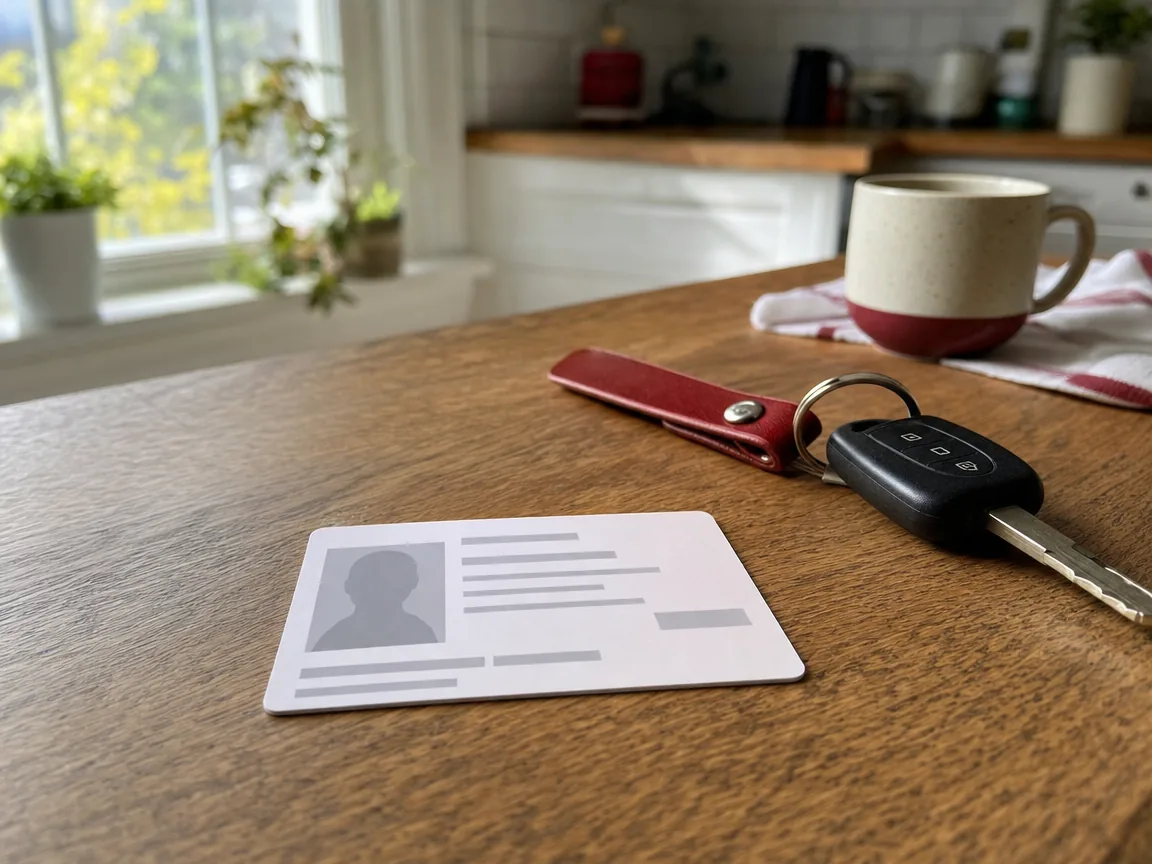
Limited License is written on a red banner across the card.
Can you drive a rental car with an interlock device?
Usually you can't rent a car. Rental fleets don't ship with the device, and companies won't give cars to anyone carrying this restriction, ALCOLOCK reports.
It also shows up in the rules that some states set themselves. Arizona's MVD states it clearly: you can't drive rental cars or any car that lacks an installed interlock. If you have this restriction, Arizona law also stops anyone from knowingly renting, leasing or lending you a car that has no interlock.
California holds the same position. Its DMV says the law forbids renting, leasing or lending a car to a driver who carries an IID restriction. IID is simply short for ignition interlock device.
Work-related driving
Your state decides if you can drive a work vehicle that has no device. These four states handle it as follows.
- California: an IID-restricted license covers driving your employer's vehicle for work, with or without an interlock in it.
- Washington: with a signed declaration from your employer, most work vehicles can be exempt from the interlock rule for 1 year. Even so, the car is just for the job. You can't commute in it or run personal errands.
- Arizona: your driving is limited to cars with a certified ignition interlock device, including work vehicles.
- Massachusetts: an interlock must be on every vehicle you own, lease or operate, your employer's included. The state grants no exceptions here.
Driving someone else's car
A relative, a friend, or an employer can have a device fitted to their own car under Pennsylvania rules, letting you drive it.
The cost of an interlock over time
The device itself is something you lease. You'll face an installation charge first, and then a monthly fee after that. Twelve months with the device typically totals $790 to $1,110, and twenty-four months $1,510 to $2,070, based on averages from Mothers Against Drunk Driving (MADD). If booking an install is something you'd like help with, a call will connect your request with an installer in your state.
For interlock periods that are shorter or longer, the cost page lists totals for other time frames.
Only the device is covered by these figures. Reinstatement fees and a license fee also apply in some states, Texas among them.