
Interlock device on a motorcycle
You won't see many interlock devices on motorcycles, and most companies that install them won't fit one to your bike. An interlock is a breath tester wired into the ignition, and if it senses alcohol, the engine won't start. If a bike is the only vehicle you own, your real problem is how to satisfy the requirement, and each state handles that differently.
Can motorcycle riders get an interlock device?
Usually not. Intoxalock says that most manufacturers, Intoxalock included, don't install interlocks on bikes.
A handful will do it. Arizona's motor vehicle division notes that only some companies take on motorcycle installs, and they tend to ask for extra parts to get the job done. Your state page names the companies with install locations close to you, so ask those whether they work on bikes.
Bikes make up a tiny slice of interlocks nationwide. NHTSA research found that in 2012, of roughly 279,000 interlocks in the US, just 0.1% to 0.2% were on motorcycles. NHTSA is the federal road safety agency.
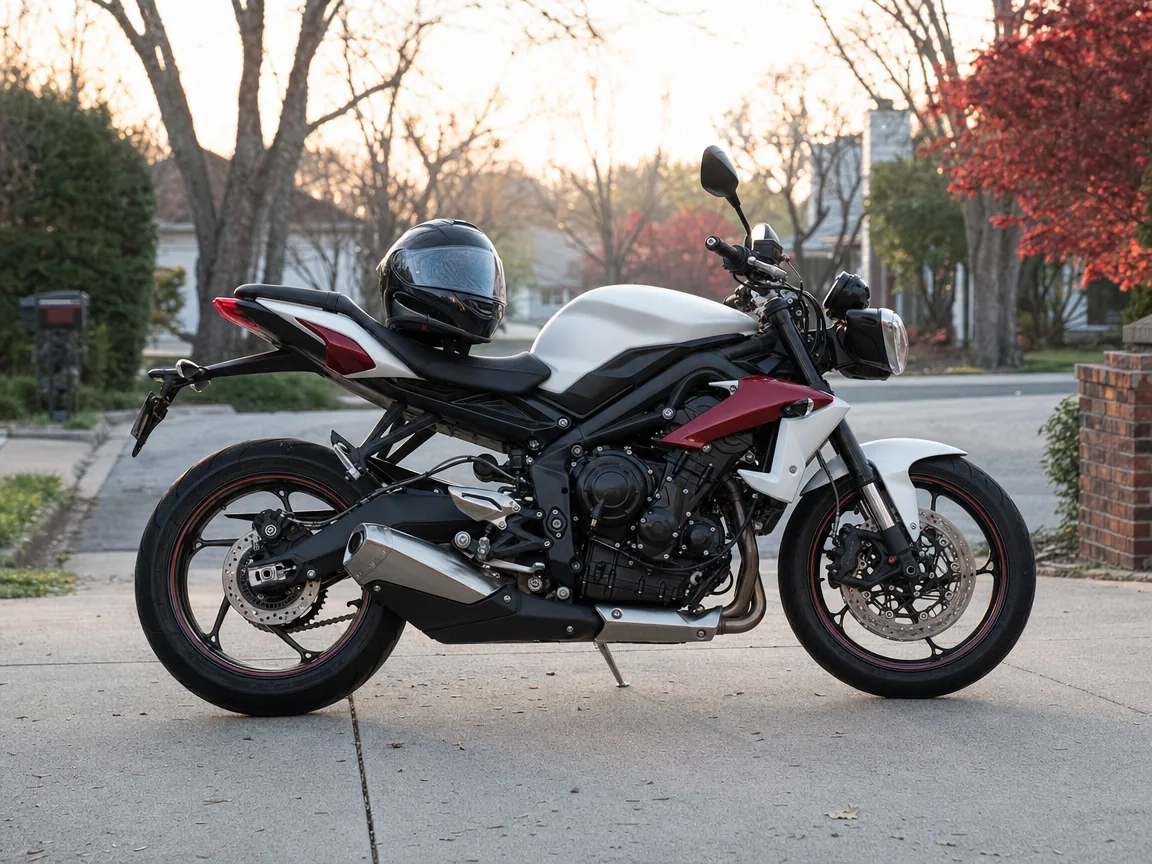
Why companies usually say no to bikes
According to a 2017 NHTSA report, motorcycle use of these devices is uncommon. It drew on breath-test records from 407 riders with the devices.
The biggest safety issue is the rolling retest. A rolling retest is a request for another breath sample during a trip, and the NHTSA report identifies these retests as a safety concern for motorcycle riders. The report also raises technical points: the device has to be shielded from weather, and mounting one on a bike means a longer, custom install.
ALCOLOCK points out that on a bike the device would be out in the dust, wind and rain. Still, the NHTSA researchers saw no technical reason interlocks couldn't go on more motorcycles. They just noted that manufacturers have little reason to bother.
Riding while your interlock requirement is active
In some places, a company refusing to fit your bike does not mean you can ride with no device. Westchester County Probation in New York is clear about this: installers turn bikes away, but that's not the same as an exemption. No motor vehicle, including a motorcycle, may be driven without an interlock.
Utah takes the same line. Utah's driver license division states that if you're under an interlock restriction, every vehicle you drive needs one, bikes included.
Some states will grant a motorcycle waiver, which formally excuses your bike from carrying the device. Intoxalock notes that even with a waiver in hand, you generally can't ride while your suspension runs. Getting one doesn't mean you're back on the road.
What state rules say about motorcycles?
States approach motorcycles differently. Here are a few official examples, though the list isn't complete:
| State | What each source says about bikes |
|---|---|
| Wisconsin | No interlock is needed on bikes, mopeds or autocycles |
| Virginia | Interlocks normally need a camera, but that camera rule doesn't apply to motorcycles and mopeds |
| Utah | Drivers under an interlock restriction cannot drive any vehicle, including a motorcycle, without an interlock |
| New York (Westchester County) | Any motor vehicle, a motorcycle among them, has to have an interlock to be operated |
| Arizona | Only a few companies will fit bikes, usually with extra parts |
Wisconsin skipping the device on bikes only speaks to the device itself. It says nothing about whether your license even allows riding during your penalty, so look through your court or license paperwork for that.
Using another vehicle to meet the requirement
Intoxalock says many riders meet the requirement by having the device fitted to another vehicle, such as a car. Installing an interlock in a car does not by itself mean you may ride your motorcycle, since that depends on the rules for your restriction.
Here is what the device usually costs. MADD puts the averages at $70 to $150 for installation plus $60 to $80 each month. Over 6 months that comes to roughly $430 to $630 altogether, and roughly $790 to $1,110 for 12 months.