
Ignition interlock in California
With an ignition interlock in California, you can often drive again right away rather than sitting through a suspension. Per the DMV, drivers in the program can comply immediately without any suspension or revocation time being served.
- Additional DMV fee when the device is required
- $103
- Restricted license before your case wraps up
- $125 fee
- Intoxalock monthly price in California
- $99 to $116
- Agency in charge
- California DMV
- Companies installing
- 8
- Device check
- no more than 60 days apart
8 interlock companies in California
| Company | From, a month | Installation | 12 months, install included | Trustpilot |
|---|---|---|---|---|
 LifeSafer | From $50 | $70 to $150 | From $670 | 4.6 of 5 |
 Guardian Interlock | From $50 | $70 to $170 | From $670 | 3.7 of 5 |
 Smart Start | From $59.99 | From $150 | From $869.88 | 4.6 of 5 |
 ALCOLOCK | From $60 | $70 to $150 | From $790 | 2.3 of 5 |
 Low Cost Interlock | From $78.76 | $100 to $250, plus $40 set-up | From $1,085.12 | 2.9 of 5 |
 Intoxalock | $99 to $116California price | Set by each service center | $1,258 to $1,542install at MADD's typical range | 4.4 of 5 |
 Dräger (RoadGuard Interlock) | Call for a quoteFirst month free | 1.7 of 5 | ||
 Alcohol Detection Systems (ADS) | Call for a quote | 2.4 of 5 | ||
Rows marked "California price" use a price posted for California; the others show each company's national starting price. The 12-month column adds a year of that price, the install price and any set-up fee, or MADD's typical $70 to $150 where no install price is posted.
The California price for Intoxalock comes from its California pricing page. MADD's national range: $70 to $150 to install, then $60 to $80 a month, or $790 to $1,110 for a year.
California ignition interlock law
| Offense | Interlock rule |
|---|---|
| First DUI, no injury | You can choose it on your own to keep driving, or the court may order up to 6 months |
| First DUI with injury | 1 year |
| Second DUI in 10 years | 1 year; 2 years with injury |
| Third DUI in 10 years | 2 years; 3 years with injury |
| Fourth or later | 3 years |
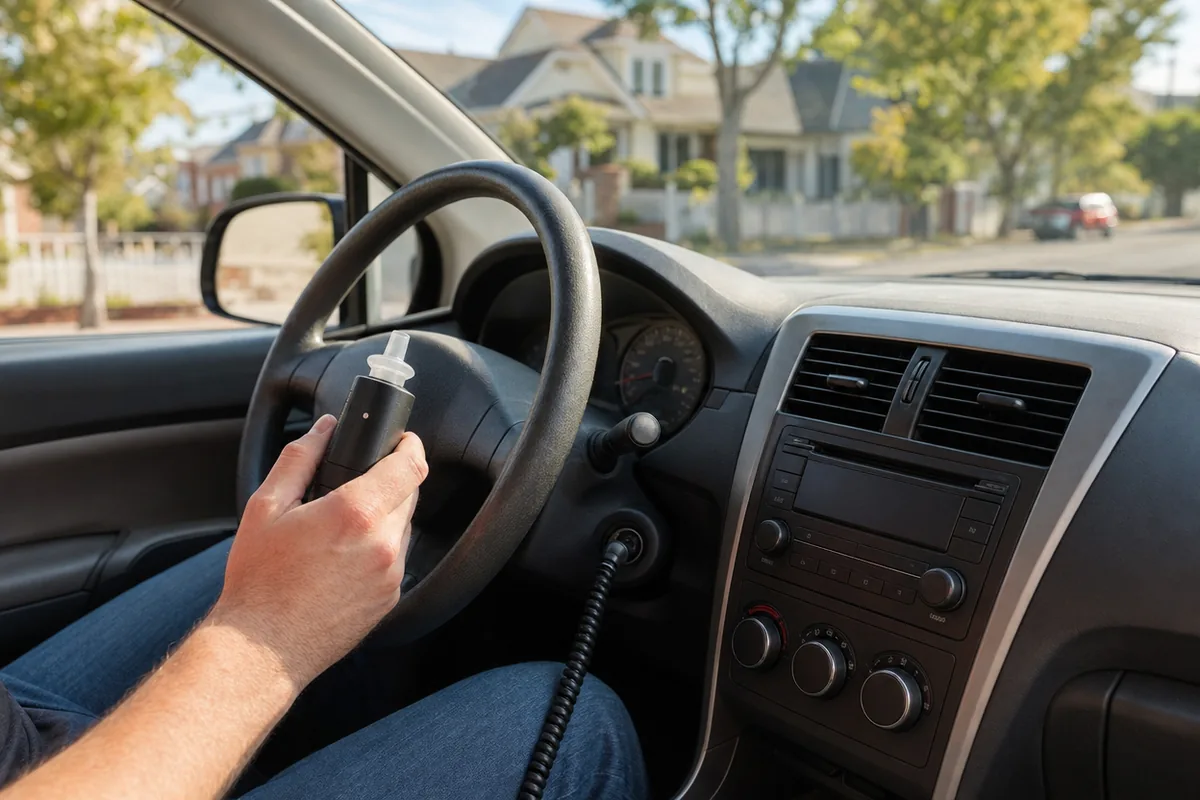
Ignition interlock law in California
The Statewide Ignition Interlock Device Pilot Program is run by the California DMV. Alcohol DUI offenses committed between January 1, 2019 and December 31, 2032 fall under it. For a first DUI where nobody was hurt, the law doesn't mandate the device, though a judge can order one for up to 6 months.
Even without a court order, the choice is still yours. As a first offender, you can go with an interlock restriction lasting up to 6 months, or take a 1-year restriction limited to driving to your job and to your DUI program. With the interlock, there are no limits on when or where you drive, provided the car you're in has the device.
How high your blood alcohol was plays a role as well. As NCSL notes, judges lean more toward ordering the device for first offenders at 0.15 or above. A second or subsequent DUI, or any DUI where someone got hurt, comes with a fixed term that can't be avoided.
Getting the license you drive on
What you're after is an interlock-restricted license, meaning you're limited to cars with the device installed. Here's the DMV's list of what you'll need:
- Get the interlock put in your car.
- Submit the Verification of Installation form, DL 920, filled out by your installer.
- Show proof of enrollment in a DUI program.
- Arrange an SR-22 filing, the insurance proof your insurer submits to the state.
You may qualify for a restricted license before your court case finishes. That path carries a $125 fee and works only if you're 21 or up and didn't refuse the breath or blood test. Every day the device isn't in your car may be a day you can't drive, so booking your install is the quickest move you can make.
What does an interlock cost in California?
In California, Intoxalock lists a monthly rate of $99 to $116. That figure comes from one provider, and every company prices its own way. Based on national averages from MADD, 6 months with a device runs roughly $430 to $630 all told.
When the device is required, the DMV adds a $103 fee on top of the standard charges for reissuing your license and adding the restriction.
Paying less when money is tight
The state uses a sliding scale, so your income decides what portion of the device cost you cover. The scale builds on the federal poverty level, the government's annual income mark that shifts with how many people live in your home.
| Where your income falls | Share you pick up |
|---|---|
| At or below 100% of the poverty line | 10% |
| Between 101% and 200% | 25% |
| Between 201% and 300%, or a CalFresh household | 50% |
| Between 301% and 400% | 90% |
The interlock company verifies what you earn. As proof, you can hand over last year's federal tax return, three months of income statements, or paperwork from EDD showing your unemployment benefits. Mention the reduced rate when you call so your documents can be reviewed when the device goes in.
Keeping your license while the device is in the car
Calibration is required at least every 60 days. It's a quick service stop where the installer inspects the device and pulls its records. Skip it and the DMV issues a Notice of Non-Compliance (form DL 921), which can lead to your license being suspended or revoked.
Get caught driving a car without an interlock while restricted and you're facing a citation, a conviction, and a suspended or revoked license. Should you fail to finish your DUI program, the DMV typically suspends your license for the remainder of the original term and until completion proof is on file.
Will the program still be around?
Yes, it will be. The rules were due to expire on January 1, 2026, but AB 366 pushes that date to January 1, 2033. The Governor signed the bill on October 13, 2025.
Install locations across California are available from eight interlock companies. When you call, your request gets routed to a company or installer covering your area so they can schedule you.