
Ignition interlock in Virginia
To get an ignition interlock in Virginia, your first step is your local Alcohol Safety Action Program, or ASAP. They confirm what the court ordered and approve the installer you choose. Your court order gives you 60 days to finish licensing with the DMV, and if you miss that window, you get no interlock credit for the gap.
Call us and we'll pass your request to an installer that serves Virginia, so they can set up your appointment.
- Monthly calibration
- $95
- Removal
- free
- Companies installing
- 4
- Deadline to finish licensing
- the 60 days allowed in your court's restricted license order
- Installation
- capped at $65 ($130 for complex vehicles)
- Agency in charge
- Virginia Alcohol Safety Action Program
4 interlock companies in Virginia
| Company | From, a month | Installation | 12 months, install included | Trustpilot |
|---|---|---|---|---|
 LifeSafer | From $50 | $70 to $150 | From $670 | 4.6 of 5 |
 Smart Start | From $59.99 | From $150 | From $869.88 | 4.6 of 5 |
 ALCOLOCK | From $60 | $70 to $150 | From $790 | 2.3 of 5 |
 Dräger (RoadGuard Interlock) | Call for a quoteFirst month free | 1.7 of 5 | ||
Prices are each company's national starting price. The 12-month column adds a year of that price, the install price and any set-up fee, or MADD's typical $70 to $150 where no install price is posted.
MADD's national range: $70 to $150 to install, then $60 to $80 a month, or $790 to $1,110 for a year.
Virginia ignition interlock law
| Offense | Interlock rule |
|---|---|
| First DUI | A minimum of 12 months with no alcohol violation, on any car you drive |
| First DUI, court reduction | At least 6 clean months with other restrictions |
| Second or later DUI | 12 months minimum, and it must cover each vehicle registered to you or that you own |
Where these rules come from: Code of Virginia 18.2-270.1.
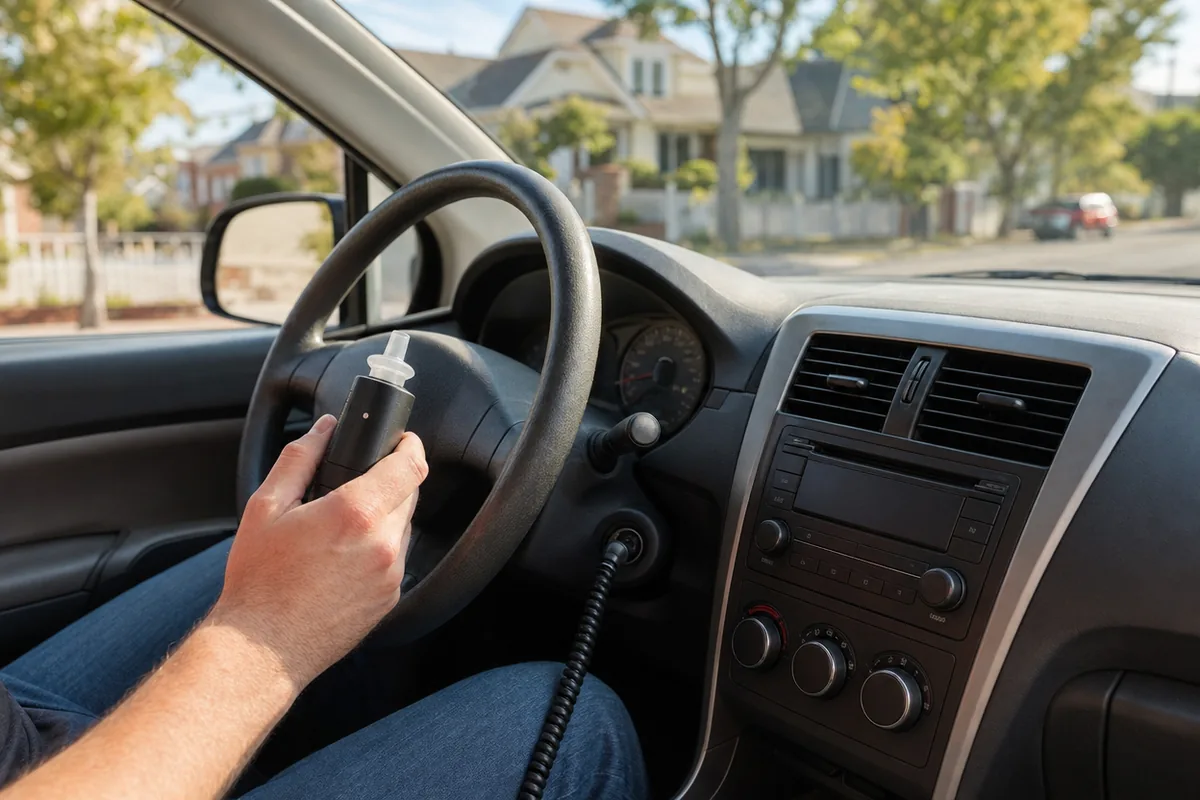
The restricted license you'll drive on
Your restricted license lets you drive under the court's conditions, including its interlock requirement. After a first DUI, the device has to be on any car you drive. After a second or later DUI, it has to be on every car you own or hold in your name.
- Reach out to your servicing ASAP office. The state runs interlock cases through 21 local programs under the Commission on VASAP.
- Your ASAP office confirms what the court requires and clears the installation with whichever vendor you pick.
- That vendor installs the device.
- Finish licensing with the DMV. It gives you a restricted license listing the interlock restriction for however long the court ordered.
What will you pay for an interlock?
Virginia caps installation at $65, or $130 for a complex vehicle. Calibration, the routine service visit where the vendor checks the device, is $95 a month, and removal is free.
There's also a $20 court and administrative fee tied to the interlock. The court clerk collects that one, not your installer.
If the fees are too steep
Each interlock provider in Virginia has to maintain an indigency fund, money set aside to reduce fees for drivers the court finds indigent. To qualify, the court has to find you indigent and the Commission has to sign off on the reduction. Worried about cost? Ask the court about this help before you decide the device is out of reach.
Service visits and the camera
No more than 30 days can pass between monitoring and calibration checks on the device. On top of that, the state requires a working camera that photographs the driver seat.
What counts as a violation?
It's not only a failed breath test. Virginia counts each of these as a violation:
- testing positive
- skipping a test
- missing a service appointment
- tampering with the device
- defeating the camera
- driving a car without an interlock
Each violation goes to your ASAP case manager and lengthens your interlock requirement. Your case can also end up back in court.
When can the interlock come off?
You'll need at least 12 months in a row, free of any violation tied to alcohol. If you're a first offender as an adult, the court can shorten that to six straight clean months when it attaches extra conditions to your restricted license. After you've served the full 12 months, or whatever period the court set, the device comes off at no charge.
New Virginia laws for 2025 and 2026
HB 561 was approved as Chapter 1112, effective July 1, 2026. From July 1, 2026, courts can grant a restricted license with the interlock installed right away in certain cases of DWI (driving while intoxicated), refusing a breath or blood test, and repeat offenses. If that could be you, contact your ASAP office early.
An earlier law, SB 1392, approved on March 21, 2025, dealt with how long the device stays on. Check your court order for the period that applies to you.